



In Breathing Matters’ 15th year, we celebrate 15 highlights in bronchiectasis and lung infection:
 UCL/H (University College London/Hospitals) were partners in The Bronch-UK research study, the first study funded by the Medical Research Council into bronchiectasis for many years. We provided 150 recruits to the study, and were one of the biggest contributors overall. Read more about Bronch-UK here.
- As part of Bronch-UK, we contributed to a research study published in the top medical journal, the New England Journal of Medicine, that showed hypertonic saline offered little additional advantages in preventing exacerbations than more standard lung clearance techniques; this study helps prevent treatment of patients with time consuming medicines that offer little benefit over other easier forms of treatment. Read more on this research here.
- Several other studies were published from the Bronch-UK research consortium looking into bronchiectasis, with UCLH as a major contributor. One investigated the connection between the number and type of bacteria present in the bronchi (the tubes through which air reaches and is spread around the lung) of patients with bronchiectasis and how badly the disease affects them. The key findings were that the numbers of bacteria and the types of bacteria tended to be stable when samples from the same patient were measured repeatedly, and that having an infective exacerbation and antibiotics had limited effects on this. Read more about this work here.
- Another Bronch-UK study, involving more than 1,300 people with bronchiectasis, looked at the impact the condition can have on mental health. It found that anxiety and depression are common, particularly in people with more severe bronchiectasis. People experiencing these difficulties were also more likely to have flare-ups of their condition and need hospital treatment. More on this here.
- We have also helped show how clinical trials can use the effects on the frequency of recurrent chest infections (termed exacerbations) to assess whether a new treatment benefits patients with bronchiectasis. This will help future clinical trials of new treatments for bronchiectasis. Additional Bronch-UK research led to another paper that described the costs of caring for patients with bronchiectasis. This important information helps demonstrate the impact of the condition and the need for better care and continued investment in research
- Through work partly carried out at UCL/H, bronchiectasis was proven to be more prevalent in the UK than previously thought – leading to better GP awareness, diagnosis and treatment.
- The same project also highlighted that patients with bronchiectasis have an increased risk of cardiovascular diseases, such as hypertension, heart attacks and strokes; this emphasises the importance of ensuring that the risk factors for cardiovascular disease are assessed and treated for patients with bronchiectasis.
- We highlighted that bronchiectasis in those with weakened immune systems due to haematological disease develops very quickly; better awareness of this will make doctors much better at recognising these patients and referring them to specialist centres, such as UCLH.
- We described how CT scans can be analysed using computers to measure the exact degree of the dilatation of the bronchi in patients with bronchiectasis. This breakthrough will allow us to follow what happens to a particular patient over time, and rapidly identify if things are getting worse. Read more on this here.
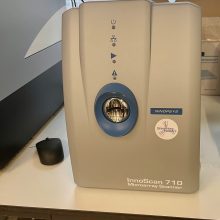
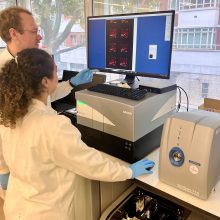 With funds raised by Breathing Matters, we purchased an array reader for analysing the patterns of antibody responses to bacteria and viruses affecting the lung. This has been used to show how age and chronic disease, such as rheumatoid arthritis, impair the immune response to bacteria that cause pneumonia, and will hopefully become a test we can use to identify who is truly at risk of getting lung infections.
- Breathing Matters has supported the important PHOSP-COVID Urgent Public Health study looking into the longterm effects of the COVID-19 virus which causes lung infection. This has resulted in multiple research publications that show for many people being admitted to hospital with COVID has long lasting effects on their health and has identified several changes in detailed blood tests associated with ‘long’ COVID. You can access all the articles and read more about this important work here.
- We contributed to a paper published in the top respiratory journal (American Journal of Respiratory and Critical Care Medicine) in July 2024 looked at the overlap between bronchiectasis and chronic obstructive pulmonary disease (COPD), a common disease of the airways caused by smoking. The results showed that many patients with bronchiectasis were inaccurately labelled as also having COPD; but patients who were accurately described as having both conditions were more likely to have exacerbations and end up in hospital. Read more here.
- Our work on novel vaccine approaches for lung infections caused by bacteria has led to four patent submissions, each of which could be developed further as a potential clinical product by pharmaceutical companies.
- In February 2026, the MHRA granted marketing authorisation for Brinsupri™ (brensocatib, a drug that reduces lung inflammation caused by white cells recruited to the lung) to treat patients aged 12 and older with bronchiectasis (NCFB) who have experienced two or more flare-ups in the past 12 months. This is the first medicine licensed in the UK that specifically treats patients living with non-cystic fibrosis bronchiectasis. More on this here.
 A new vaccine was introduced in 2025 to prevent infections with respiratory syncytial virus (also called RSV). Initially this was only available for those aged 75 years, but we are hopeful that its use will be extended to people with chronic lung diseases (including bronchiectasis).
Alongside our work into lung infections, we have funded 15 years of pioneering research into ILD and pulmonary fibrosis. Discover our ILD research highlights.
[Posted 2026]