


In 2026, Breathing Matters celebrates an important milestone – 15 years of supporting pioneering research into pulmonary fibrosis, interstitial lung disease (ILD) and lung infection.
When we launched in January 2011, our ambition was simple but bold: to improve the lives of people living with respiratory disease by supporting innovative research, inspiring the next generation of clinicians and bringing together patients, scientists and healthcare professionals with a shared purpose.
Fifteen years later, thanks to the extraordinary generosity of our supporters, we have raised more than £1.5 million to help transform respiratory research.
Looking back, our greatest achievement has not been any single discovery. It has been helping build a research programme that follows the patient’s journey from diagnosis to treatment.
Every project we have supported has contributed to one of four goals:
- Earlier diagnosis
- Better understanding of disease
- Better treatments
- Better people to deliver them
Today, we are using advanced imaging, molecular biology, artificial intelligence and precision medicine to answer one of the biggest questions in respiratory research:

The answer could transform the future of pulmonary fibrosis.
As we celebrate our fifteenth anniversary, we look back at fifteen highlights that you have helped make possible.
15 highlights from 15 years
1. Patients have always led the way
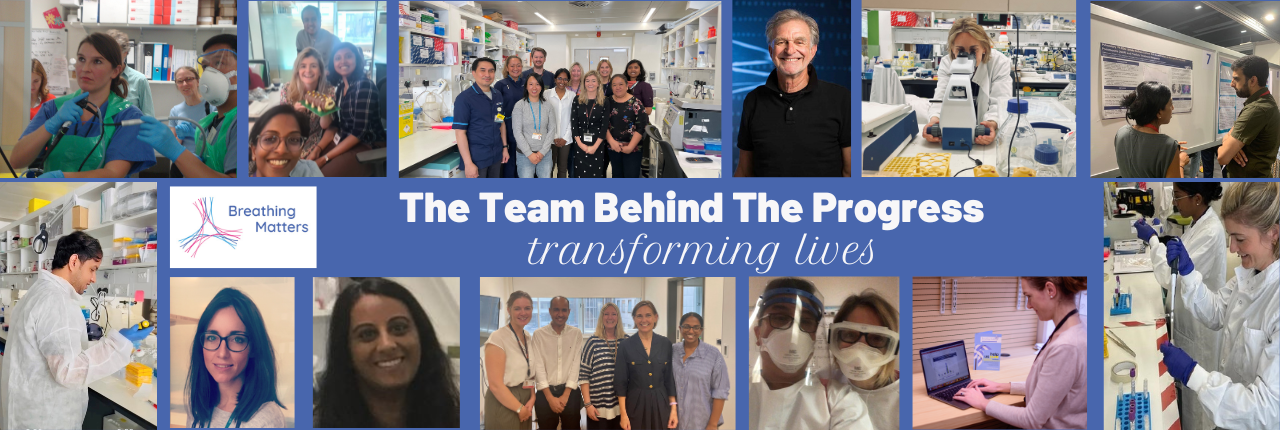
 Breathing Matters began with patients.
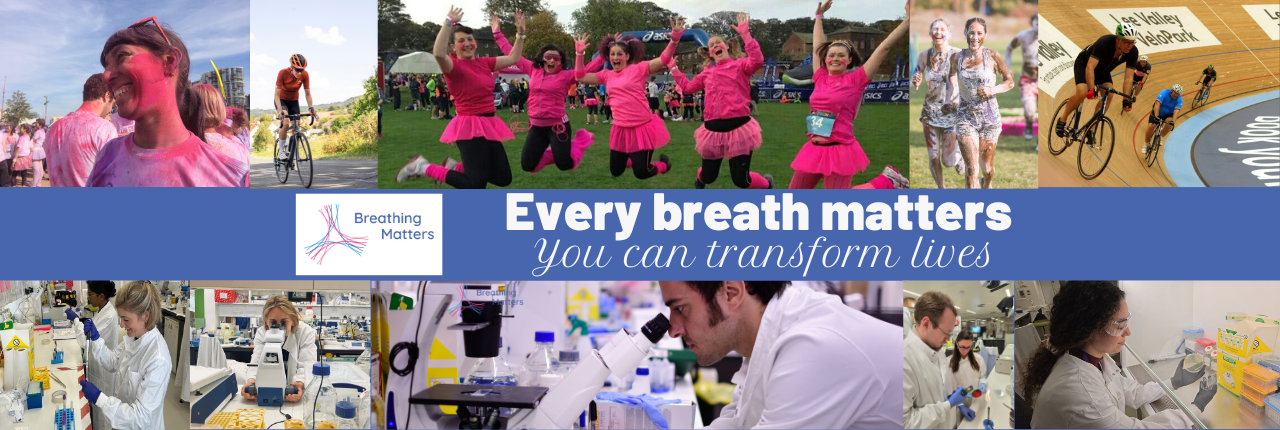
Our launch event brought together more than 100 patients, relatives, clinicians and scientists to discuss what mattered most to people living with respiratory disease. That philosophy continues today. Through patient meetings, laboratory tours, research events and fundraising activities, our supporters continue to shape the questions we ask and the research we undertake.
Everything we do starts with patients.
2. From no treatments to a new generation of therapies
When Breathing Matters was founded, there were no licensed treatments for Progressive Pulmonary Fibrosis (PPF) and Idiopathic Pulmonary Fibrosis (IPF).
Over the last fifteen years, the introduction of pirfenidone and nintedanib has transformed patient care by slowing disease progression.
Now, an exciting new generation of medicines is emerging. Clinical trials of drugs, such as nerandomilast, are offering fresh hope that combination therapies may further slow fibrosis and improve patients’ lives.
Research supported by Breathing Matters is helping develop the biomarkers and imaging techniques needed to identify which treatments will work best for each individual patient so that we can deliver truly personalised medicine.
⇒ ⇒ ⇒ Read more about the clinical trials our team has participated in
3. Investing in the next generation of ILD specialists
Great discoveries depend on great people.
Through your donations, Breathing Matters has proudly funded six Clinical Fellows:
- Dr Sharenja Ratnakumar
- Dr Theresia Mikolasch (Matz Clinical Fellow)
- Dr Helen Garthwaite (Hulme Clinical Fellow)
- Dr Emma Denneny (Whittington Clinical Fellow)
- Dr Jagdeep Sahota
- Dr Hannah Torlot (Whitaker Clinical Fellow)
All are interstitial lung disease clinicians or are training to become ILD specialists.
We have also funded masters students, research nurses and PhD students.
Together, they have established new clinical services, pioneered imaging techniques, developed biomarkers and helped attract substantial additional research funding. Their work will continue to improve patient care for decades to come.
4. Over £1.5 million invested in hope
 Every bake sale
- Every marathon
- Every concert
- Every sponsored walk
- Every donation
Together, our supporters have helped Breathing Matters raise more than £1.5 million for respiratory research.
Every pound raised by Breathing Matters goes where it matters most, with over 90% invested directly in life-changing research every year, not overheads
That investment has funded research equipment, Clinical Fellows, students and nurses, innovative imaging, laboratory science, clinical trials and translational research designed to improve patients’ lives.
Thank you all.
⇒ ⇒ ⇒ Discover what your support has made possible
5.  Transforming diagnosis with cryobiopsy
 Making the right diagnosis is the first step towards effective treatment.
Breathing Matters helped establish one of the UK’s first cryobiopsy services for interstitial lung disease. This minimally invasive technique avoids the need for surgery in many patients while providing excellent quality lung tissue for diagnosis and research.
The service has trained other centres across the UK and has even enabled studies of inhaled medicines, helping future treatments reach exactly where they are needed in the lung.
⇒ ⇒ ⇒ Read more about cryobiopsy treatment
⇒ ⇒ ⇒ Read about our inhaled therapy work
6. Seeing disease before lung function changes
Breathing Matters established one of the UK’s pioneering molecular PET imaging programmes in ILD.
Unlike conventional CT scans, PET imaging allows us to see the biological activity occurring inside the lungs.
Our research has shown that PET imaging can detect changes even before the CT scan shows an abnormality. PET imaging can also predict disease progression, improve risk prediction and may help identify whether new treatments are working much earlier than traditional tests.
This is an important step towards truly personalised medicine.
Explore our PET/CT research:
⇒ ⇒ ⇒ Seeing ILD differently
⇒ ⇒ ⇒ PET scans offer hope for SSC ILD patients
⇒ ⇒ ⇒ PET/CT study reveals blood vessel growth correlation in fibrotic lung disease
7. Building the biomarkers of tomorrow
Imagine diagnosing pulmonary fibrosis with a simple blood test.
That is one of our greatest ambitions.
Breathing Matters has supported research into blood biomarkers, proteomics and genetics to identify the biological fingerprints of pulmonary fibrosis.
Combined with advanced imaging and artificial intelligence, these biomarkers may one day detect disease before irreversible scarring develops, predict how rapidly disease will progress and identify which treatments are most likely to benefit each individual patient.
⇒ ⇒ ⇒ Learn more about this project here
8. Understanding why lungs scar
Understanding disease is the first step towards curing it.
Our researchers have explored the role of neutrophils, clotting pathways, NETosis, MUC5B genetics and immune responses in pulmonary fibrosis.
These discoveries are uncovering how inflammation and abnormal wound healing drive lung scarring, opening the door to entirely new treatments.
The more we understand why fibrosis develops, the better our chances of preventing it.
⇒ ⇒ ⇒ MUC5B project
⇒ ⇒ ⇒ Neutrophil project
9. Learning from COVID-19
 The COVID-19 pandemic presented enormous challenges, but it also created a unique opportunity to understand how lungs repair themselves.
Through studies of post-COVID lung disease, Breathing Matters researchers have used proteomics, single-cell analysis, advanced imaging and microbiome research to understand the biological processes involved in injury and repair.
One of the most encouraging findings has been that many patients continue to recover, even after significant lung injury.
This has led us to ask one of the most important questions in respiratory medicine:
Why can lungs recover after severe viral pneumonia, yet continue to scar in progressive pulmonary fibrosis?
The answer could unlock entirely new treatments for pulmonary fibrosis.
Read about our post-COVID research here:
⇒ ⇒ ⇒ Post-COVID lung microbes stay healthy
⇒ ⇒ ⇒ Cystic fibrosis drug helps patients with COVID-19
⇒ ⇒ ⇒ Multi-organ MRI findings after hospitalisation with COVID-19
10. Transforming clinical trials
Better treatments require better ways of measuring success.
Breathing Matters has helped develop novel imaging biomarkers, blood biomarkers and minimally invasive sampling techniques that have the ability to make clinical trials faster, more informative and more personalised.
These advances will help promising new therapies reach patients more quickly.
11. Improving care beyond pulmonary fibrosis
 Although pulmonary fibrosis has remained a major focus, Breathing Matters has also supported important research into bronchiectasis, lung infection, rheumatoid arthritis-associated ILD and the long-term consequences of COVID-19. We have also done ground breaking work on the role of muscle wasting (sarcopenia) in worsening quality of life and prognosis in patients with chronic lung disease with the aim of helping maintain muscle bulk and strength so that all patients can lead longer and healthier lives.
Every discovery helps improve the lives of people living with chronic respiratory disease.
⇒ ⇒ ⇒ Read more about our 15 year highlights in Lung Infection
12. Sharing knowledge
Research changes lives only when it is shared.
Over the past fifteen years, we have not only published our research in peer reviewed journals and presented our findings at international meetings, we have also organised patient education meetings, laboratory tours, newsletters, podcasts, awareness campaigns, educational events and online resources to ensure patients, families and healthcare professionals benefit from the latest discoveries.
⇒ ⇒ ⇒ Watch our pulmonary fibrosis videos
⇒ ⇒ ⇒ Read our newsletters
13. Incredible supporters
Our supporters have inspired us every single year.
They have cycled, climbed mountains, run marathons, baked cakes, shaved heads, organised concerts, hosted golf days, danced at silent discos, completed tractor runs and undertaken countless personal challenges.
Every event has helped move respiratory research forward.
Thank you for all that you have done.
⇒ ⇒ ⇒ How to get involved
14. Building an internationally recognised research programme
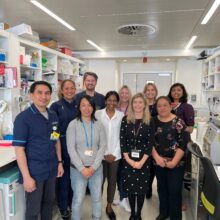 From pioneering cryobiopsy and molecular PET imaging to biomarker discovery and translational immunology, Breathing Matters has helped establish internationally recognised research programmes that continue to attract national and international collaborations.
By supporting innovative ideas early, our supporters have helped generate much larger research programmes that continue to benefit patients around the world.
15. Looking to the future
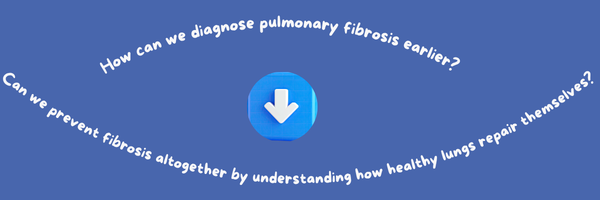
Fifteen years ago, we asked: How can we diagnose pulmonary fibrosis earlier?
Today, we are asking a much bigger question: Can we prevent fibrosis altogether by understanding how healthy lungs repair themselves?
Advances in artificial intelligence, molecular imaging, proteomics, single-cell biology, biomarkers and precision medicine are bringing us closer to that goal than ever before.
Our vision remains unchanged: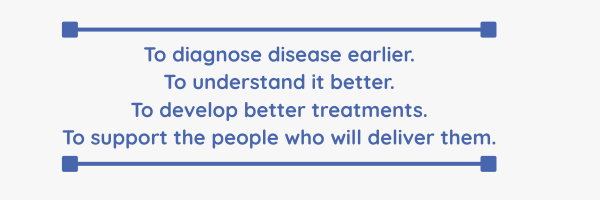
None of this would have been possible without our patients, families, fundraisers, volunteers, researchers and supporters.
- Together, we have raised over £1.5 million for research,
- Together, we have helped change respiratory medicine, and
- Together, we look forward to making the next fifteen years even more remarkable.
There is still so much more to discover, and your support will help turn today’s research into tomorrow’s breakthroughs.
Thank you for being part of our journey — and for helping us make every breath matter.
Donate now and help fund the next breakthrough
[Posted 2026]