



Researchers have identified a potential new way to target the cells responsible for scarring in idiopathic pulmonary fibrosis (IPF), raising hopes for future treatments. However, the work is still at an early stage and has not yet been tested in people. The study, recently published in Nature Immunology, explored whether the immune system could be trained to recognise and remove some of the cells that contribute to lung scarring.
What did the researchers do?
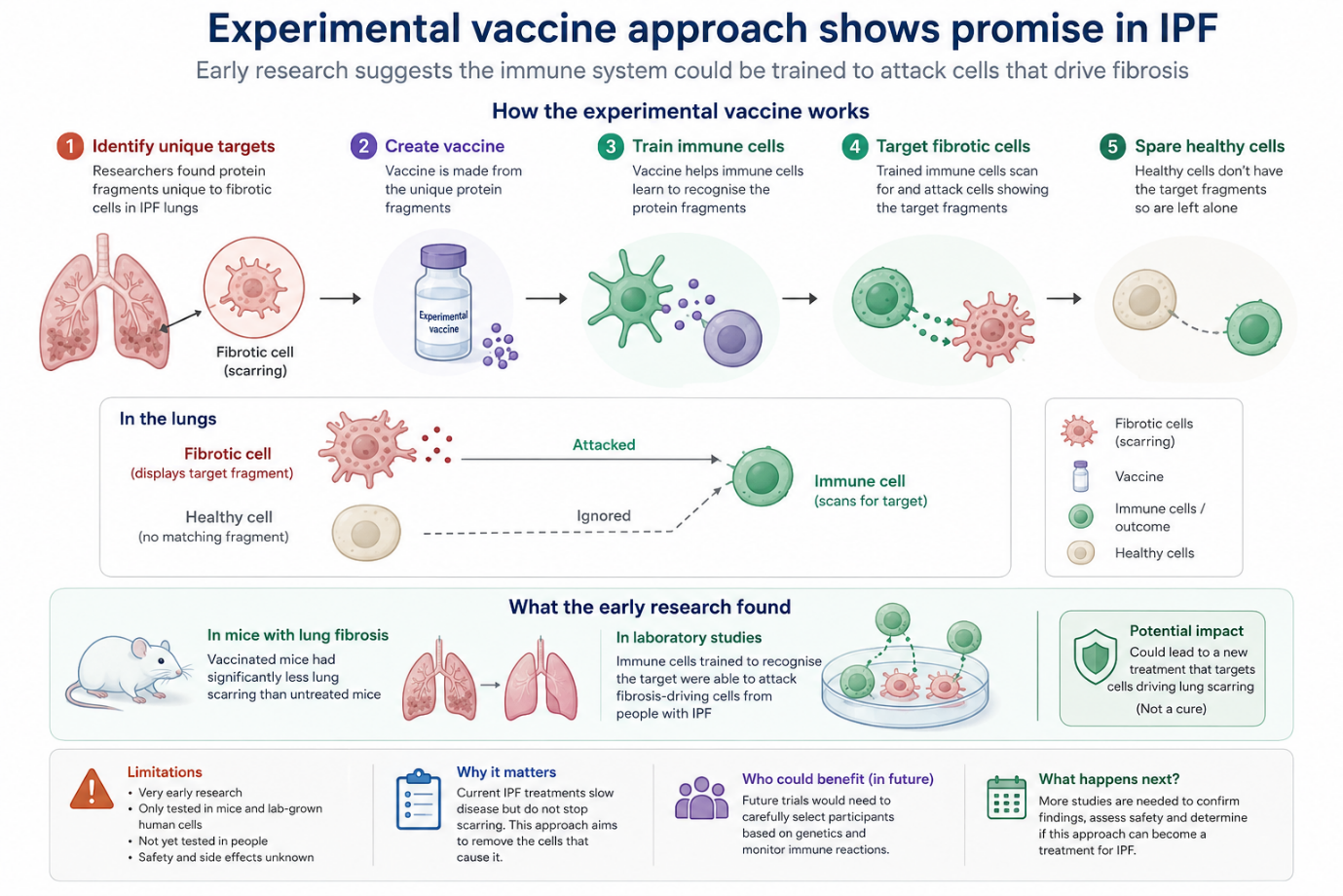
Scientists examined lung tissue from people with IPF and identified small protein fragments were specific to the cells involved in the scarring process and were not expressed by healthy cells. They then developed an experimental vaccine from these proteins designed to help the immune system recognise these protein fragments and mount an immune response to the cells that expressed them. The vaccine was tested in laboratory mice with lung fibrosis and in human cells grown in the laboratory.
What were the results?
Mice that received the vaccine developed significantly less lung scarring than untreated mice. The researchers also found evidence that the vaccine activated immune cells that could target and destroy scar-forming cells. In laboratory experiments using cells from people with IPF, immune cells trained to recognise one of the protein fragments were able to attack cells involved in fibrosis.
Why is this important?
Current IPF treatments can slow disease progression, but they do not stop or reverse scarring. This research suggests it may be possible to develop treatments that specifically target the cells driving fibrosis. The approach is similar in principle to some cancer immunotherapies, which train the immune system to recognise and attack harmful cells.
What are the limitations?
Although the findings are encouraging, this research is still at a very early stage. The vaccine has only been tested in animal models and laboratory-grown human cells. It has not yet been shown to be safe or effective in people with IPF. Researchers also note that any future clinical trials would need to carefully select participants based on their genetic profiles and closely monitor for unwanted immune reactions.
What happens next?
Further studies will be needed to confirm the findings, assess safety and determine whether this approach could be developed into a treatment for people living with IPF. While it is too early to know whether this research will lead to a new therapy, the study highlights an innovative way of using the immune system to target the processes that drive lung scarring.
Reference Nature Article: Immunopeptidome profiling in pulmonary fibrosis provides a platform for identifying therapeutic targets | Nature Immunology
[Posted June 2026]