



1st July marks World Bronchiectasis Day — a global initiative to raise much-needed awareness about this chronic and often misunderstood lung condition that affects hundreds of thousands of people worldwide. At Breathing Matters, we are proud to support this important day and to stand alongside the bronchiectasis community in advocating for greater research, understanding and support.
 What is Bronchiectasis?
Bronchiectasis is a long-term lung disease where the airways (the bronchi) become abnormally widened, leading to chronic bacterial infection of the bronchi. This stimulates increased mucus production by the bronchi, and can cause chronic cough, breathlessness, fatigue and repeated chest infections. The condition can affect people of all ages and often goes undiagnosed or misdiagnosed for years.
Bronchiectasis is becoming more common in the UK, especially among older adults and people with underlying lung conditions, but despite this bronchiectasis remains under-researched and under-recognised. There is currently no cure, and treatment options are limited — often relying on physiotherapy, antibiotics and infection management. Bronchiectasis can affect daily activities due to fatigue and breathlessness.
Why Research Matters
We believe research is key to improving lives. By supporting vital research, we are working towards a future where bronchiectasis is no longer a hidden illness — but one that is properly understood, treated and ultimately preventable. Researchers at UCL / UCLH have been involved in research that led to several new findings that were published recently. These include the following:
 A paper published in the top respiratory journal (American Journal of Respiratory and Critical Care Medicine) in July 2024 looked at the overlap between bronchiectasis and chronic obstructive pulmonary disease (COPD), a common disease of the airways caused by smoking. The results showed that many patients with bronchiectasis were inaccurately labelled as also having COPD; but patients who were accurately described as having both conditions were more likely to have exacerbations and end up in hospital. (Polverino et al. Am J Respir Crit Care Med 2024 Jul 1;210(1):119-127. doi: 10.1164/rccm.202309-1614OC. Read more on this here
- Professor Brown published an editorial in the European Respiratory Journal, reviewing the findings of Perea et al regarding the important role of interleukin (IL)-1β in bronchiectasis. The protein IL-1β is an important marker of inflammation that increases during active infection, and in this study the amount of IL-1β in the sputum reflected the severity of the bronchiectasis. Higher levels of sputum IL-1β was associated with more symptoms, poorer lung function and higher levels of infection. These findings indicate treating patients with bronchiectasis with drugs that block IL-1β could be beneficial. Continue reading here
- Several studies from Bronch-UK—a UK-wide research consortium looking into bronchiectasis, with UCLH as a major contributor—were published. One investigated the connection between the number and type of bacteria present in the bronchi (the tubes through which air reaches and is spread around the lung) of patients with bronchiectasis and how badly the disease affects them. The key findings were that the numbers of bacteria and the types of bacteria tended to be stable when samples from the same patient were measured repeatedly, and that having an infective exacerbation and antibiotics had limited effects on this. These findings contribute further to our understanding of infection of the bronchi in bronchiectasis and their relationship with clinical outcomes. Find out more here
- A second study of over 1300 patients looked at the association of having bronchiectasis with psychological symptoms. The results showed that anxiety and depression are common in bronchiectasis, and are worse in people with more severe bronchiectasis, and predict patients whose health is more severely affected by the bronchiectasis as they were more likely to have exacerbations and be admitted to hospital. Read more here
- Another now accepted by European Respiratory Journal Open defines how clinical trials can use the effects on the frequency of recurrent chest infections (termed exacerbations) to assess whether a new treatment benefits patients with bronchiectasis. Read the full article here
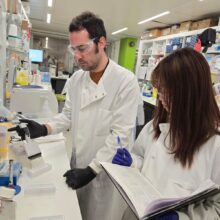 A fourth paper described the costs of caring for patients with bronchiectasis, vital data for arguing both for improved care for people with bronchiectasis and showing the importance of disease when competing for research funding.
- A UK multicentre study including UCL investigated whether common mucoactive treatments used in bronchiectasis—nebulised hypertonic saline and carbocisteine—reduce lung flare-ups. In 288 adults with non-cystic fibrosis bronchiectasis and frequent exacerbations, participants received either treatment or standard care and were followed for one year. The study found that neither treatment significantly reduced the number of flare-ups, with similar rates across all groups. While both therapies were safe, they did not show clear benefit in preventing exacerbations overall, although some patients may still experience symptom relief. Further research is needed to identify more effective ways to reduce flare-ups in bronchiectasis. Find out more here
- On 23 February 2026, the MHRA approved Brinsupri™ (brensocatib) for patients aged 12 and over with non-cystic fibrosis bronchiectasis who have had two or more flare-ups in the past year. This is the first medicine licensed in the UK specifically for bronchiectasis. Brinsupri™ is a once-daily tablet that targets DPP1, a protein involved in airway inflammation, helping to reduce flare-ups and support lung health. In clinical trials involving over 1,700 people, it reduced exacerbations and delayed time to first flare-up. While airway clearance, antibiotics, and lifestyle measures remain essential, this represents an important step forward in treating the underlying inflammation in bronchiectasis. For more information, click here
- A major study in The Lancet Respiratory Medicine found that people with bronchiectasis who have severe daily symptoms—such as cough, sputum production, and breathlessness—are at higher risk of future flare-ups, even without a history of frequent exacerbations. Analysis of over 9,400 patients also showed that those with high symptom burden benefit from long-term azithromycin or erythromycin just as much as patients with frequent flare-ups, suggesting preventive treatment may be appropriate for a wider group than current guidelines recommend. Continue reading here
Overall, the papers published have given us much-needed detailed data on different aspects of bronchiectasis that will help contribute towards better care of patients with this condition in the future and hopefully lead to novel treatment approaches.
How You Can Help?
- Learn the symptoms – Chronic
 cough, frequent lung infections, breathlessness and excessive mucus could be signs. Understanding the condition helps in managing it better. Learn more about bronchiectasis by visiting this page.
 - Raise awareness – Share facts and stories on social media using the hashtags #WorldBronchiectasisDay #BreathingMatters
- Support research – Donate to fund research into better treatments and, one day, a cure. You can donate here.
- Take part in clinical trials – If eligible, you could help shape the future of bronchiectasis care. Talk to your respiratory doctor to find out more.
- Come along to our events – We have regular charity stalls at UCLH and an annual Christmas Concert in London every December. Sign up on the website to receive our newsletters or follow us on our socials for more information.
Together, We Can Make a Difference
With your help, we can bring bronchiectasis out of the shadows. We can fund research that saves lives, raises awareness, supports patients and brings us closer to a world where no one has to live with this often-overlooked disease in silence.
Your support this World Bronchiectasis Day makes a real difference – thank you.