



Breathing Matters supported important research at UCL/H investigating whether advanced imaging could help doctors better understand and predict the course of non-specific interstitial pneumonia (NSIP), a type of interstitial lung disease (ILD).
A new study, published in the European Journal of Nuclear Medicine and Molecular Imaging in July 2026, has shown that a specialised PET/CT scan may provide valuable information about how NSIP is likely to behave over time.
Why this research matters
 ILD describes a group of conditions where the lung tissue becomes inflamed and/or scarred, making it harder for the lungs to work properly. Many patients with autoimmune rheumatic diseases, such as rheumatoid arthritis or scleroderma, or other insults to the lung, such as smoking or medication-induced, develop a pattern of ILD that is partly inflammatory and partly fibrotic and is called NSIP. NSIP can affect people differently. Some people remain stable or improve with treatment, while others develop progressive lung fibrosis (scarring) regardless of the underlying cause.
At present, doctors use information such as lung function tests, CT scans and clinical assessments to estimate how a person’s disease may progress. However, predicting the future course of NSIP for an individual patient remains challenging.
This research looked at whether PET/CT imaging could provide additional information to help doctors identify patients who may be at higher risk of disease progression.
What did the study involve?
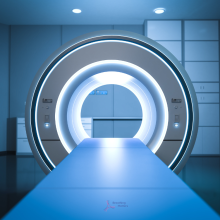 Researchers at University College London Hospitals (UCLH) and University College London (UCL) followed 96 people with NSIP who had a specialised scan called an 18F-FDG PET/CT scan.
This type of scan measures areas of increased glucose uptake -which reflects increased metabolic activity- within the lungs. Higher activity can reflect ongoing biological processes, such as inflammation or changes associated with lung disease.
The researchers compared PET scan results with patients’ lung function measurements and long-term outcomes.
What did researchers find?
The study found that:
- Higher levels of glucose uptake seen on the PET scan were associated with a greater risk of poorer outcomes in people with NSIP.
- PET scan measurements provided additional information beyond traditional assessments, such as lung function tests and existing risk scores.
- Combining PET scan information with current ILD assessment tools improved doctors’ ability to separate patients into groups with different levels of risk.
What could this mean for patients?
 This research suggests that PET/CT scans could one day help doctors better understand how NSIP behaves, enabling more personalised monitoring and treatment decisions.
Importantly, this study does not mean that PET/CT scans are currently used routinely for all patients with NSIP. Further research is needed to confirm these findings in larger groups of patients and understand how PET imaging could best be used in everyday clinical care.
However, the findings represent an important step towards more personalised approaches to ILD care, where doctors can use detailed information about each person’s disease biology to guide decisions.
Supporting research that improves the future of ILD care
Breathing Matters is proud to support research at UCLH that aims to improve diagnosis, monitoring and treatment for people living with ILD.
Research like this helps move us closer to a future where patients receive more accurate predictions about their disease and more personalised care.
You can read the full article here.
This research was carried out by the Whitaker Fellowship funded by Breathing Matters through an unrestricted donation in memory of Rosemary Whitaker.
[Posted August 2026]